
Contact Info
347 Schaeffer Hall
319-335-2348
timothy-hagle@uiowa.edu
Twitter: @ProfHagle
Spring 2026 Office Hours
Tue & Th: 4:45-6:15
Mailing Address
Dept of Political Science
341 Schaeffer Hall
20 E. Washington Street
The University of Iowa
Iowa City, Iowa 52242
News
Posted 15 papers in the Burger Court Agenda Setting Series.
Posted updated Prelaw FAQ for UI students
Posted updates to 12 papers in Iowa Voting Series for 2024 election data
New Book: Iowa Votes, updated and expanded 3d edition, published for Kindle devices.
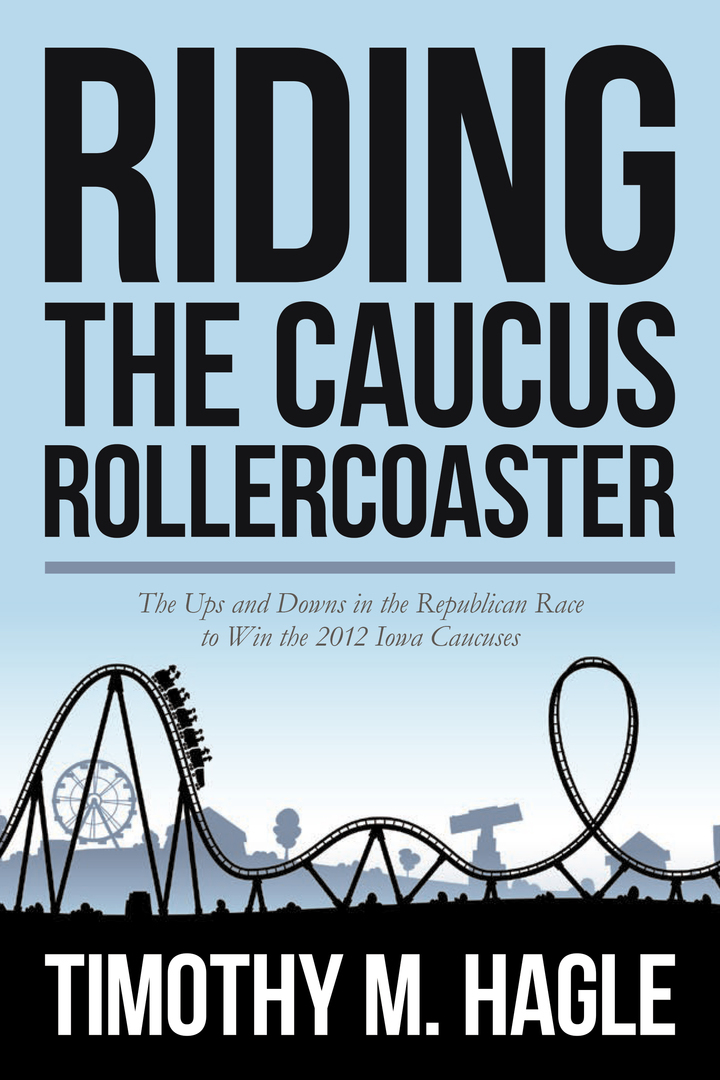
New Book, Riding the Caucus Rollercoaster 2024, published in paperback and for Kindle devices.
New Book, Supreme Court Agenda Setting: The Warren Court, published for Kindle devices and computers with Kindle reader.
My books

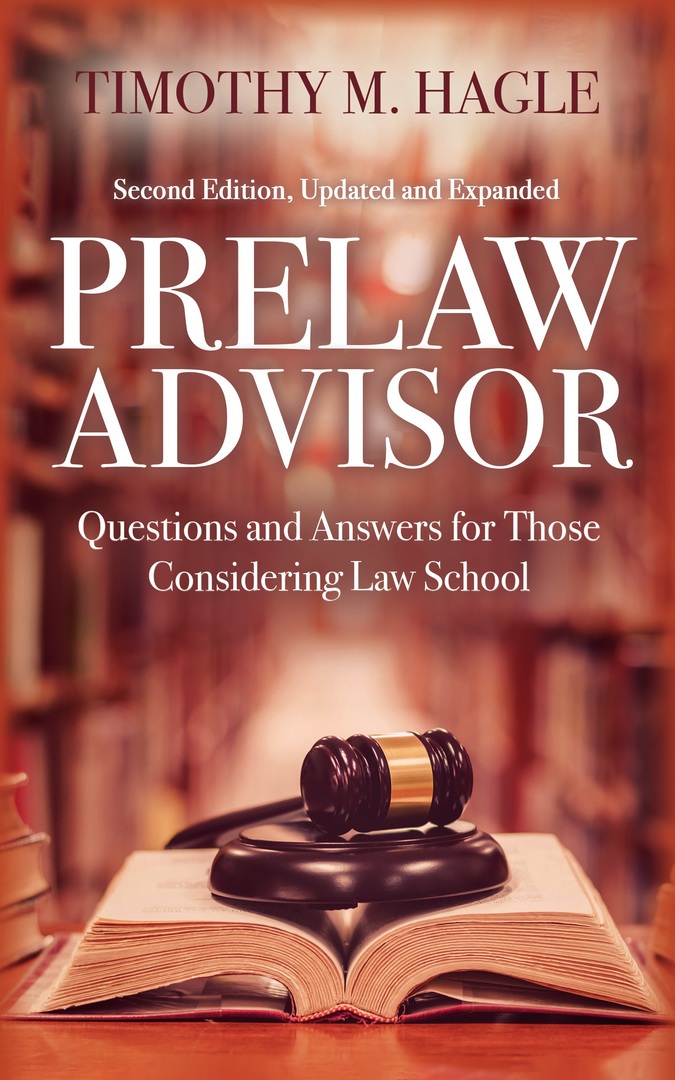

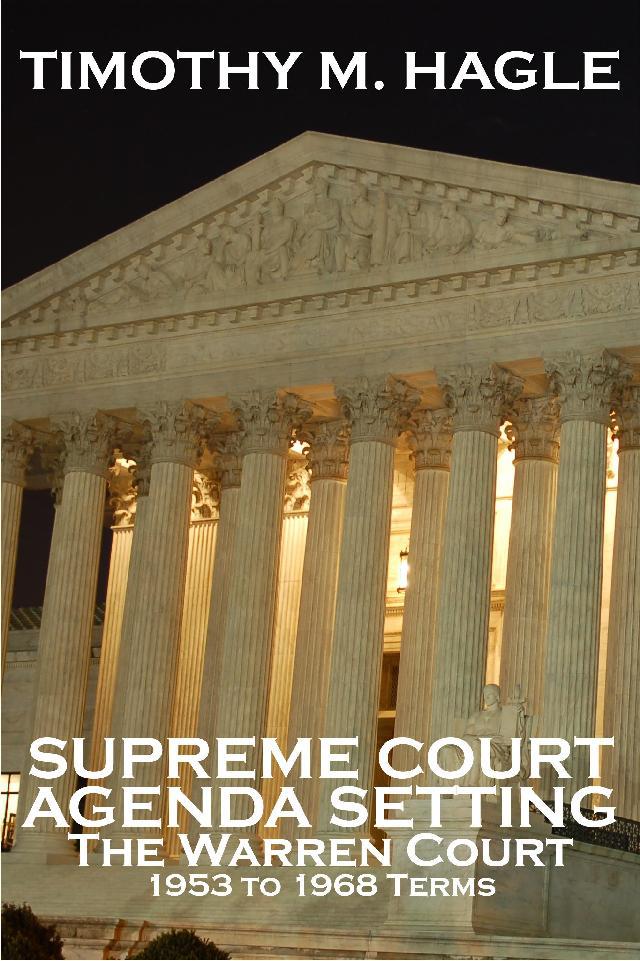
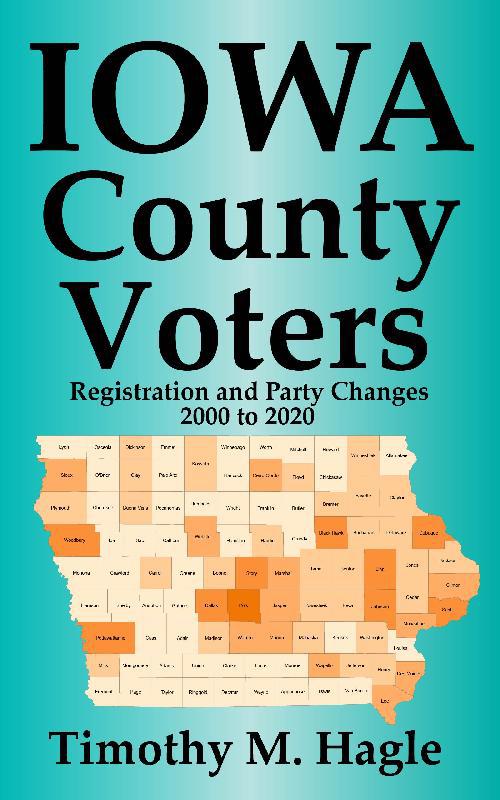
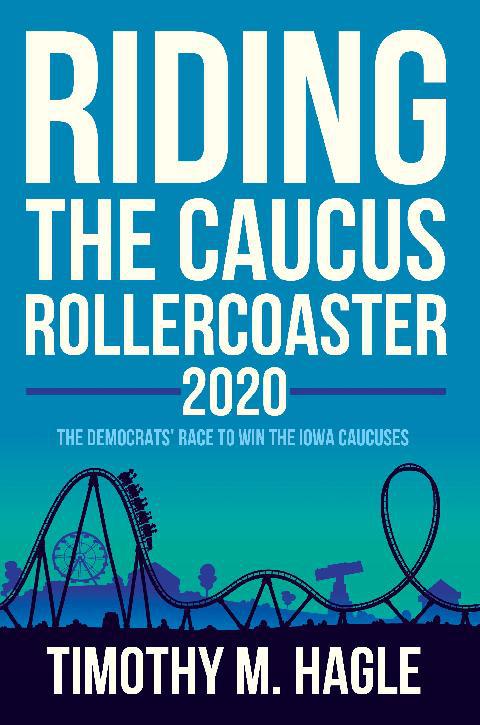



Supreme Court Agenda Setting: The Burger Court (1969 to 1985 Terms)
The papers that follow are a series of papers I have written regarding agenda setting on the Burger Court. The papers on Burger Court agenda setting follow the pattern and topics of those I wrote on the Vinson and Warren Courts’ agenda setting. As each paper was completed updates and corrections sometimes changed a few of the specific numbers presented in papers that came earlier in the series. Even so, the general results for each paper did not change. The papers for the Vinson Court were eventually combined into a book titled, Supreme Court Agenda Setting: The Vinson Court (available on Amazon.com). The papers for the Warren Court were combined in a book titled Supreme Court Agenda Setting: The Warren Court (also available on Amazon.com). The paper for the Burger Court will be combined in a book to be titled Supreme Court Agenda Setting: The Burger Court. I expect it will be available on Amazon.com in the summer of 2026. The book will use the final numbers after all the corrections and updates.
Agenda Setting on the Burger Court Paper 1: State and Federal Circuit Differences
Agenda setting of the United States Supreme Court is a matter of continuing interest to judicial scholars. Previous studies have examined several aspects of the agenda
setting process. These studies have usually focused on specific issues, particular terms, or sampling for their data collection. A more comprehensive examination of the cases filed before the Supreme
Court will provide a clearer picture of how the justices set their agenda. To that end, this study will examine all cases on the Burger Court’s appellate docket. As a first cut with this data, this
study will examine four empirical questions related to cases filed before the Supreme Court: 1) is there a difference in acceptance rates between state and federal cases, 2) is there a difference in
acceptance rates between federal circuits, 3) is there a difference in acceptance rates for state cases in the federal circuits, and 4) is there a difference in acceptance rates between state and
federal cases from the same federal circuits?

01BurgCirGeowithCov.pdf
Adobe Acrobat document [324.8 KB]
Agenda Setting on the Burger Court Paper 2: Certiorari and Appeal on the Burger Court Agenda
Agenda setting of the United States Supreme Court is a matter of continuing interest to judicial scholars. Most studies of agenda setting focus on the Court’s exercise of its certiorari jurisdiction. The assumption is that cases on appeal (as opposed to certiorari) are obligatory, which means that factors affecting the discretionary decisions on certiorari petitions would not be in play. This assumption, that cases on appeal are treated differently than those on certiorari, has not been tested. The purpose of this study is to take some initial steps in a determination of whether, and to what extent, the Court treats cases on appeal and certiorari differently in terms of the review decision, decision on the merits, and whether the Court summarily disposed of the case. The 17 terms of the Burger Court’s appellate docket provide an interesting period of the Court’s caseload for examination. Results show that although there are clear differences in the treatment of the two types of cases, there still may not be sufficient justification for the exclusion of appeals from studies of the Court’s agenda setting.
02BurgCertAppealwithCov.pdf
Adobe Acrobat document [275.5 KB]
Agenda Setting on the Burger Court Paper 3: Workload as a Factor
Judicial scholars have long been interested in Supreme Court agenda setting. Political histories and biographies touch on the topic in relatively general terms and a
long line of studies have examined factors related to why some petitions for writs of certiorari are granted review by the Court and others not. Because of the sheer number of certiorari petitions
filed each term, most scholars sampled the data. Despite the many studies that have examined various aspects of the Court’s agenda setting, my focus here is on a specific aspect of the agenda setting
process that has not yet been addressed in the literature. Although legal considerations are clearly important, the Court’s workload may affect the justices’ agenda setting as well. In this paper I
assume that the justices are consistent in the approach they use to cope with their workload. Even so, it is the workload that tends to vary and this leads us to the central question of this
study.
In this paper I examine all cases filed on the Burger Court’s appellate docket. Using charts to illustrate the data and difference of means tests to determine the
significance of the results I find that that workload does seem to affect certain aspects of the Court’s agenda setting, particularly when appeals and petitions for certiorari are considered
separately.
03BurgDays01withCov.pdf
Adobe Acrobat document [423.3 KB]
Agenda Setting on the Burger Court Paper 4: Related Cases in Agenda Setting
Although thousands of petitions seeking review by the Supreme Court are filed each year, the justices only accept about 150 or fewer for plenary review, with maybe a few hundred more disposed of summarily. Thus, scholars have long thought that the justices must use some strategy or process to reduce their workload to manageable levels. Although the examination of agenda setting on the Supreme Court is of continuing interest to judicial scholars, previous studies have usually focused only on cert petitions, specific issues, particular terms, or sampling for their data collection. A more comprehensive examination of the cases filed before the Supreme Court will provide a clearer picture of how the justices set their agenda.
Drawing from an ongoing database project this study examines all cases filed before the Burger Court (1969 to 1985 Terms). The specific question addressed in this paper
is whether “related” cases have an increased chance of being accepted for review by the Supreme Court. The results show that related cases have a statistically significant higher chance of being
granted review by the Supreme Court. This finding is shown to be quite robust when examined in relation to four additional factors.
04BurgRelatedwithCov.pdf
Adobe Acrobat document [225.1 KB]
Agenda Setting on the Burger Court Paper 5: Lower Court Reversals and Dissents as Factors
Although thousands of petitions seeking review by the Supreme Court are filed each year, the justices only accept about 150 or fewer for plenary review, with perhaps a
few hundred more disposed of summarily. Because of this low acceptance rate scholars have long thought that the justices must use some strategy or process to reduce their workload to manageable
levels. Although the examination of agenda setting on the Supreme Court is of continuing interest to judicial scholars, previous studies have usually focused only on cert petitions, specific issues,
particular terms, or sampling for their data collection. A more comprehensive examination of the cases filed before the Supreme Court will provide a clearer picture of how the justices set their
agenda.
Drawing from an ongoing database project this study examines all cases filed before the Burger Court (1969 to 1985 Terms). The specific question addressed in this paper is whether lower court reversals or disagreement increase the likelihood of a case being accepted for review by the Supreme Court. The results show that for cases coming from both state and federal courts the presence of a reversal or dissent below significantly increases the likelihood of the Supreme Court accepting the case for review.
05BurgLCRevDiswithCov.pdf
Adobe Acrobat document [241.4 KB]
Agenda Setting on the Burger Court Paper 6: Court Level as a Factor
Although thousands of petitions seeking review by the Supreme Court are filed each year, the justices only accept about 150 or fewer for plenary review, with perhaps a few hundred more disposed of summarily. Because of this low acceptance rate scholars have long thought that the justices must use some strategy or process to reduce their workload to manageable levels. Although the examination of agenda setting on the Supreme Court is of continuing interest to judicial scholars, previous studies have usually focused only on cert petitions, specific issues, particular terms, or sampling for their data collection. A more comprehensive examination of the cases filed before the Supreme Court will provide a clearer picture of how the justices set their agenda.
Drawing from an ongoing database project this study examines all cases filed before the Burger Court (1969 to 1985 Terms). The specific question addressed in this paper is whether a form of ripening occurs based on the level of the lower court (trial court, court of appeals, state supreme court) or the number of judges on a lower court which increases the chances for acceptance by the Supreme Court. The results show that ripening seems to be a factor for cases coming to the Supreme Court from lower state courts but not for the cases coming from lower federal courts. In fact, cases coming from federal district courts have a much higher acceptance rate than those from federal courts of appeal, regardless of whether the case was from a three-judge or single-judge district court.
06BurgHighLowwithCov.pdf
Adobe Acrobat document [259.6 KB]
Agenda Setting on the Burger Court Paper 7: Government Parties as a Factor
Although thousands of petitions seeking review by the Supreme Court are filed each year, the justices only accept about 150 or fewer for plenary review, with perhaps a few hundred more disposed of summarily. Because of this low acceptance rate scholars have long thought that the justices must use some strategy or process to reduce their workload to manageable levels. Although the examination of agenda setting on the Supreme Court is of continuing interest to judicial scholars, previous studies have usually focused only on cert petitions, specific issues, particular terms, or sampling for their data collection. A more comprehensive examination of the cases filed before the Supreme Court will provide a clearer picture of how the justices set their agenda.
Drawing from an ongoing database project this study examines all cases filed before the Burger Court (1969 to 1985 Terms). The specific question addressed in this paper is whether the presence of government parties in a case affects the chances for acceptance by the Supreme Court. The results, which prove to be rather robust, show that they do. In various combinations, federal or state/local government entities, as appellant or appellee, in criminal or noncriminal cases, are associated with a statistically significant difference in the acceptance rate by the Court.
07BurgGovPartieswithCov.pdf
Adobe Acrobat document [302.1 KB]
Agenda Setting on the Burger Court Paper 8: Law Enforcement Parties as a Factor
Although thousands of petitions seeking review by the Supreme Court are filed each year, the justices only accept about 150 or fewer for plenary review, with perhaps a few hundred more disposed of summarily. Because of this low acceptance rate scholars have long thought that the justices must use some strategy or process to reduce their workload to manageable levels. Although the examination of agenda setting on the Supreme Court is of continuing interest to judicial scholars, previous studies have usually focused only on cert petitions, specific issues, particular terms, or sampling for their data collection. A more comprehensive examination of the cases filed before the Supreme Court will provide a clearer picture of how the justices set their agenda.
Drawing from an ongoing database project this study examines all cases filed before the Burger Court (1969 to 1985 Terms). The specific question addressed in this paper
is whether the presence of law enforcement parties in a case affects the chances for acceptance by the Supreme Court. The results show that the Court is slightly less likely to accept a case for
review when a law enforcement entity is present. A more detailed examination, however, shows the Court to be much more likely to accept a case when a law enforcement entity is the appellant and very
unlikely when the appellee. There were also differences between law enforcement and other government entities and between federal and state or local law enforcement entities as parties.
08BurgLawEnforcementwithCov.pdf
Adobe Acrobat document [288.5 KB]
Agenda Setting on the Burger Court Paper 9: Criminal Defendants as a Factor
Although thousands of petitions seeking review by the Supreme Court are filed each year, the justices only accept about 150 or fewer for plenary review, with perhaps a
few hundred more disposed of summarily. Because of this low acceptance rate scholars have long thought that the justices must use some strategy or process to reduce their workload to manageable
levels. Although the examination of agenda setting on the Supreme Court is of continuing interest to judicial scholars, previous studies have usually focused only on cert petitions, specific issues,
particular terms, or sampling for their data collection. A more comprehensive examination of the cases filed before the Supreme Court will provide a clearer picture of how the justices set their
agenda.
Drawing from an ongoing database project this study examines all cases filed before the Burger Court (1969 to 1985 Terms). The specific question addressed in this paper
is whether criminal defendants are treated differently by the Court in terms of the review decision. Consistent with the findings of prior papers, the results show that the Court was generally less
likely to accept cases for review from criminal defendants. One exception was when the criminal defendant was the appellee. Although the number of cases in this category was relatively small, the
Court was very likely to accept such cases for review.
09BurgACandCCwithCov.pdf
Adobe Acrobat document [271.9 KB]
Agenda Setting on the Burger Court Paper 10: Administrative Parties as a Factor
Although thousands of petitions seeking review by the Supreme Court are filed each year, the justices only accept about 150 or fewer for plenary review, with perhaps a
few hundred more disposed of summarily. Because of this low acceptance rate scholars have long thought that the justices must use some strategy or process to reduce their workload to manageable
levels. Although the examination of agenda setting on the Supreme Court is of continuing interest to judicial scholars, previous studies have usually focused only on cert petitions, specific issues,
particular terms, or sampling for their data collection. A more comprehensive examination of the cases filed before the Supreme Court will provide a clearer picture of how the justices set their
agenda.
Drawing from an ongoing database project this study examines all cases filed before the Burger Court (1969 to 1985 Terms) on its appellate docket. The specific question
addressed in this paper is whether administrative parties were treated differently by the Burger Court in terms of the review decision. The results show that cases with administrative parties were
more likely to be granted review by the Court. This was particularly true if the administrative party was the appellant rather than the appellee. There were also differences between federal, state,
or local administrative parties.
10BurgAdminwithCov.pdf
Adobe Acrobat document [268.2 KB]
Agenda Setting on the Burger Court Paper 11: Administrative Action as a Factor
Although thousands of petitions seeking review by the Supreme Court are filed each year, the justices only accept about 150 or fewer for plenary review, with perhaps a
few hundred more disposed of summarily. Because of this low acceptance rate scholars have long thought that the justices must use some strategy or process to reduce their workload to manageable
levels. Although the examination of agenda setting on the Supreme Court is of continuing interest to judicial scholars, previous studies have usually focused only on cert petitions, specific issues,
particular terms, or sampling for their data collection. A more comprehensive examination of the cases filed before the Supreme Court will provide a clearer picture of how the justices set their
agenda.
Drawing from an ongoing database project this study examines all cases filed before the Burger Court (1969 to 1985 Terms) on its appellate docket. The specific question
addressed in this paper is whether cases involving administrative action were treated differently by the Court in terms of the review decision. The results show that cases with administrative action
were more likely to be granted review by the Court. More specifically, cases with either federal or state administrative action had a higher acceptance rate than cases with no administrative action.
At the federal level there were also some differences depending on the particular agency.
11BurgAdminActionwithCov.pdf
Adobe Acrobat document [297.6 KB]
Agenda Setting on the Burger Court Paper 12: Only a Single Lower Court as a Factor
Although thousands of petitions seeking review by the Supreme Court are filed each year, the justices only accept about 150 or fewer for plenary review, with perhaps a few hundred more disposed of summarily. Because of this low acceptance rate scholars have long thought that the justices must use some strategy or process to reduce their workload to manageable levels. Although the examination of agenda setting on the Supreme Court is of continuing interest to judicial scholars, previous studies have usually focused only on cert petitions, specific issues, particular terms, or sampling for their data collection. A more comprehensive examination of the cases filed before the Supreme Court will provide a clearer picture of how the justices set their agenda.
Drawing from an ongoing database project this study examines all cases filed before the Burger Court (1969 to 1985 Terms) on its appellate docket. The specific question addressed in this paper is whether cases that were reviewed by only a single lower court were treated differently by the Court in terms of the review decision. The results show that although cases with the same source and origin courts had a higher acceptance rate than other cases, there were differences between state and federal courts, as well as differences between courts at both the state and federal levels.
12BurgSourceOriginwithCov.pdf
Adobe Acrobat document [255.8 KB]
Agenda Setting on the Burger Court Paper 13: Ideological Error Correction as a Factor
Although thousands of petitions seeking review by the Supreme Court are filed each year, the justices only accept about 150 or fewer for plenary review, with perhaps a few hundred more disposed of summarily. Because of this low acceptance rate scholars have long thought that the justices must use some strategy or process to reduce their workload to manageable levels. Although the examination of agenda setting on the Supreme Court is of continuing interest to judicial scholars, previous studies have usually focused only on cert petitions, specific issues, particular terms, or sampling for their data collection. A more comprehensive examination of the cases filed before the Supreme Court will provide a clearer picture of how the justices set their agenda.
Drawing from an ongoing database project this study examines all cases filed before the Burger Court (1969 to 1985 Terms) on its appellate docket. The specific question involves the extent to which the Court takes cases to reverse them on ideological grounds. The results strongly suggest that the Burger Court had an ideological approach to both accepting cases for review and for disposing of them on the merits. This proved to be particularly true for cases from federal courts as well as cases coming before the Court on petitions for writs of certiorari.
13BurgErrorCorrectionwithCov.pdf
Adobe Acrobat document [285.1 KB]
Agenda Setting on the Burger Court Paper 14: Full and Summary Dispositions in Cases Granted Review
Prior papers in this series focused specifically on the Court’s decision to grant review. Factors related to whether the Court grants review are also related to how the Court disposes of cases on the merits. More specifically, this study examines whether certain factors affect the Court’s decision to summarily dispose of a case on the merits or to give it a full review.
Drawing from an ongoing database project this study examines all cases granted review during the Burger Court (1969 to 1985 Terms) on its appellate docket. Three basic factors are considered: whether the case was filed as a petition for a writ of certiorari or an appeal, whether the case was affirmed or reversed (including those vacated) by the Court, and whether the lower court decision was liberal or conservative. The results show a clear difference in disposition (summary or full) of cases on certiorari versus those on appeal. There was a statistically significant difference in the type of disposition between cases affirmed and those reversed when the cases were separated into those on certiorari and those on appeal. There was also a difference in the Court’s method of disposition depending on the ideological direction of the lower court decision when the lower court decision was liberal.
14BurgSummarywithCov.pdf
Adobe Acrobat document [227.6 KB]
Agenda Setting on the Burger Court Paper 15: Case Types and Issue Areas
Prior papers in this series focused specifically on the Court’s decision to grant review. Although some of those factors were related to the substantive issues presented in the cases, this paper takes a closer look at case types and issue areas in the cases filed.
Drawing from an ongoing database project this paper examines the case types and substantive issue areas of all cases during the Burger Court (1969 to 1985 Terms) on its appellate docket. Examination of case types and issue distribution of the Burger Court’s appellate docket provides background and context for prior examinations of the factors related to agenda setting on the Burger Court as well as for examinations of the Vinson and Warren Court agendas.
The examination here is descriptive, meaning no statistical tests are performed. The results show a consistency in the types of cases filed even as the number of cases on the Court’s docket grew. There was also a consistency in the types of issues presented to the Court. On the other hand, the Court took higher percentages of some types of cases for review than others, possibly due to its ideological preferences.
15BurgIssueAreaswithCov.pdf
Adobe Acrobat document [302.1 KB]
 Print
Print